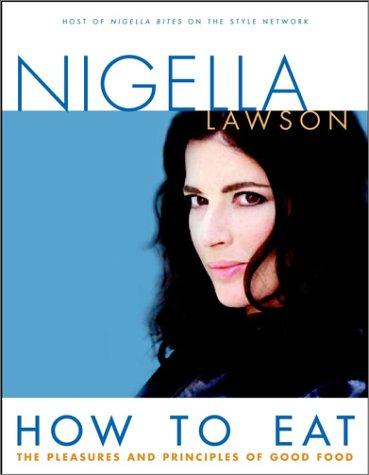
How to Eat
by Nigella Lawson
Buy on Amazon"A chatty, sometimes cheeky, celebration of home-cooked meals."—USA TodayThrough her wildly popular television shows, her five bestselling cookbooks, her line of kitchenware, and her frequent media appearances, Nigella Lawson has emerged as one of the food world's most seductive personalities. How to Eat is the book that started it all—Nigella's signature, all-purposed cookbook, brimming with easygoing mealtime strategies and 350 mouthwatering recipes, from a truly sublime Tarragon French Roast Chicken to a totally decadent Chocolate Raspberry Pudding Cake.…
Recommended by
"Yes it was. If I could keep only one cookbook, this would be it. How to Eat suits the way I cook. It is as if Nigella is sitting on a stool next to me in the kitchen as I’m cooking. It’s almost like she’s chatting to me. There’s an intelligence to the way she writes and she expects a certain intelligence of her readers as well. Her recipes don’t patronise. There’s nothing reverential or sombre about the food she writes about, or the way she writes about it. There is a school of thought that recipes are set in stone and that you have to follow them word for word. The lovely thing about Nigella’s writing is that her recipes do work in spirit as well as in practice. You can do exactly that, you can think, ‘Well actually I’ve got three carrots, I’ll just put three in.’ “My recipes tend to be very chatty and informal, and, well, they are a bit vague sometimes” She is always very generous, and it’s quite clearly written by someone who adores food. With every page, you know she loves this stuff, and she wants you to love it too. It’s a very, very special book for me. My own copy is falling apart."
Best Cookbooks of All Time · fivebooks.com
"Yes, I read How to Eat from cover to cover when I was about 22 and I cooked nearly everything from it. It was her warm self-deprecating lovely tone that really engaged me. I loved the way that she described food. Everything about that book felt accessible. There was none of that preachy it should be done like that – pages and pages of instructions kind of thing. It was just this wonderful, friendly, easy rolling-off-the-page kind of writing. Yes, you feel her passion for good eating when she is both writing and cooking, and I feel the same way about food. I was and am thrilled to be compared to her. I should be so lucky – I think she’s a goddess! Because we were both middle-class women who weren’t trained. There in lay the similarity. I found it depressing that, as a woman who also had a story to tell, I was immediately considered to be aping Nigella. With men who cook there is a media sense of blokey camaraderie, not this immediate desire to pit them against each other, and foster some alleged rivalry. One of the other books we will talk about later (by Simon Hopkinson) is also very creamy and buttery and I think that is the basis of a lot of cooking. But the whole point is that you don’t eat that every day or at every meal. It is so easy to leap on things. I don’t think Nigella is waving a militant finger and telling people to eat like this all the time. You have to have a balance. I was in France recently and the buttery creamy thing is in the very genes of French cooking. It is all about the way you eat it, though, with some awareness."
Cooking · fivebooks.com