← All books
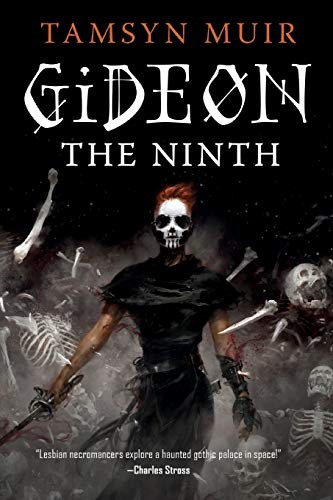
Gideon the Ninth
by Tamsyn Muir
Buy on Amazon
"The Emperor needs necromancers. The Ninth Necromancer needs a swordswoman. Gideon has a sword, some dirty magazines, and no more time for undead nonsense. Tamsyn Muir’s Gideon the Ninth unveils a solar system of swordplay, cut-throat politics, and lesbian necromancers. Her characters leap off the page, as skillfully animated as arcane revenants. The result is a heart-pounding epic science fantasy. Brought up by unfriendly, ossifying nuns, ancient retainers, and countless skeletons, Gideon is ready to abandon a life of servitude and an afterlife as a reanimated corpse. She packs up her sword, her shoes, and her dirty magazines, and prepares to launch her daring escape. But her childhood nemesis won’t set her free without a service.…
Recommended by
"The first of a proposed trilogy, Gideon the Ninth is a freaky science-fantasy-horror-romance mashup that is as deliriously all over the map as it is wickedly smart and propulsive. The setup is genius: In some (possibly distant, possibly ancient) corner of the universe exist nine ancient houses each adept in different forms of gooey, death-obsessed magic. Representatives from each have been called together in a competition, so The Lady Harrowhark Nonagesimus, heir to the Ninth House, and her unwilling bodyguard, Gideon Nav (a smart, mean and badass orphaned girl), arrive and find that someone (or something) is killing heirs of the nine houses and that Gideon and Harrow are in terrible danger. What follows is a goofy, bloody, foul-mouthed Scooby-Doo episode full of ghosts, monsters, sword fights and bitter, terrible friendships that will gut you before you turn the last page."
"Gideon the Ninth has been officially described as ‘lesbian necromancers in space,’ although many people have pointed out that many of the characters are not lesbians, the main character is not a necromancer, and—actually—they spend most of their time on a planet. Still, I love this tagline as a starting point because it tells you to abandon all preconceptions and go along with the ride. My God, what a ride this is. The main character is a glorified bodyguard in a Gormenghast -like religion. She’s a horrible teenage lesbian girl who’s mainly in love with working out and pin-up girls in magazines, and who wants to run off and join the army. That’s a pretty uncommon archetype for lesbians in mainstream science fiction; I’m not saying it hasn’t been done—of course there have been butch lesbians in science fiction—but I love this horrible teen. She is in love with a horrible nerd girl, who also happens to be the high priestess and heir to their house. They are pulled away from their home for a deadly competition in which the necromancers are all trying to ascend to a higher realm. It’s almost a horror book . I would say it’s mainly sci-fi, crossed a bit with horror. The sequel to this book made me scared to turn the light off, but that’s because I’m a complete baby about horror. I never read horror, but I read this book because I love it. Get the weekly Five Books newsletter A lot of the book is about the aesthetic of raising skeletons, of the horrible things we can do with each other’s bodies, and death and life. That chimes very heavily with queer theory and with queer themes, because a lot of it is about what you do with your body beyond religious dictates about what is right and what is wrong, and ethical dictates about ‘I can do this thing, is this right or is this not right?’ I think there are a couple of reasons I love it. First, it’s really funny. The concept as I’ve just given it does not sound funny, but it’s hilarious. Secondly, this is a book that is full of messy queer people. This one is also not a traditional romance, though I’d say it’s slightly more romantic than Some Desperate Glory . It has a whole cast of various shades of people who have really messy queer desires, which don’t always work out. They do horrible things to each other, they betray each other, they have obsessions that they shouldn’t, and none of that is about ‘oh, I feel bad about being gay.’ We have gone into ten dimensions of terrible ways to be gay. I love that you can be gay, and you can be just really awful about it. I love this book. It’s great. It’s a really interesting question. The place we are lucky to be in right now is that we have so many queer science fiction narratives that one of them does not have to bear the burden of being everything for everyone. That’s really important because in earlier years, we had some discussions about whether people were getting tired of coming-out narratives and whether it is better to write queernorm (which means depicting a society in which being queer is un-remarked upon and people have other problems). I think we’ve finally gotten to a place where we realize it’s not that either one of them is better. It’s not that gay people can’t have happy relationships, ethical relationships, unethical relationships, or horribly messy and toxic relationships. It is good that all of those are represented. It’s fantastic for science fiction fans that all of those are represented in science fiction. I tend to write queernorm worlds, and I tend to write relationships that are messy but ultimately ethical and happy. In some of these books, that is not the case, and it’s fantastic for me that we have these options."