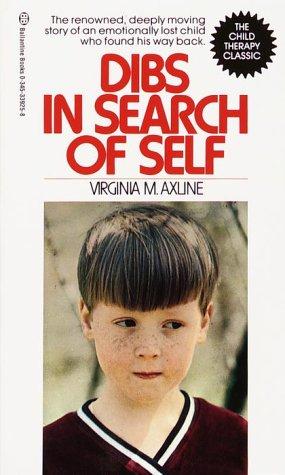
Dibs in Search of Self
by Virginia M Axline
Buy on AmazonWhen renowned psychotherapist Virginia Axline first encountered Dibs at his New York School, he was a little boy lost to the world. He would not talk. He would not play. He sat alone, defying every attempt at interaction. Axline was the last resort. This is her seminal account of how, through weekly play therapy sessions over the course of one year, Dibs's extraordinary character, and the reason for his silent withdrawal, were gradually revealed. Dibs in Search of Self is a classic of child therapy, and a moving story of transformation.
Recommended by
"This is a wonderful book. I’ve read it several times and it’s almost guaranteed to make you cry. Dibs came from an academic family that was well off. He was having trouble in school and his parents thought he was autistic. Axline accepted his idiosyncrasies and offered him a respectful outlet for his imagination and worked with the parents. They began to be more accepting of him and Dibs began to be more accepting of himself. It’s a small book, but very moving and very powerfully written. Children that don’t get the opportunity for open-ended play don’t get any of the benefits we’ve been talking about. They don’t get the vocabulary, they don’t learn self-control, they lose out on imaginative life. They only know how to interact through rough and tumble play and so they become difficult to interact with in the schoolyard and hard to teach in class. The good news is that we can teach children play skills and we can see a significant difference after two weeks. The book offers parents and teachers of preschool children ideas for play. For example, we suggested a sensory shelf filled with little vials of different substances to help them develop their sense of smell. Each section of the book deals with a different sort of play. In a section on sociodynamic play we suggest props for pretending, and in a section on physical play we describe how to make an obstacle course out of your living room. All the ideas came from a workshop we did with parents at Yale, so almost every one of those ideas was tested and tried out. We were distributing the ideas on mimeographed sheets and a parent suggested we put them together into a book. We warn against being too invasive. That was based on research done in South Africa, which found that when you continuously play with the child you’re taking over and the child won’t get the full benefits of exercising their mind. Just start playing and then back out. Get the child started and then listen for when they get stuck and need a suggestion or could benefit from a new word such as a treasure chest for a pirate game. Another suggestion is to give your child unstructured toys. Your child will be much better off with more blocks and fewer toys that entail batteries or remote controls. Children are best off with things that are open-ended – crayons, pads, dolls. Another thing that we suggest is to take your child outdoors to experience the outside world. Look for birds. Smell the flowers. Turn over a rock and see what is beneath. There are few things that are more exciting and engrossing for a child. Studies are showing that children who are heavily into the Internet and television are less imaginative in their play. They don’t play the elaborate games that children who are lighter users of media construct. The more you rely on television for formulaic stories, rather than enacting your own story though the use of play and props, the less imaginative you will be. It’s hard to do an MRI on a child who is playing, so we don’t have a database to speak with certainty, currently. But I’d suspect that when we do we’d see more activity when we play. Oh yes, studies show their minds become much more open, and seeing their children enjoying the benefits of play awakens the love of play in them. When your child plays imaginatively, the benefits carry over to you. What a question! Maybe if we were a more playful society we could resolve some of the conflicts we have now. I don’t see a lot of cooperative behaviour in Congress. Maybe if they all had a romp together that could change."
Play · fivebooks.com
"Virginia Axline is a family therapist, and I like this book because it really resonates in terms of why I do what I do and, particularly, why I am passionate about child and adolescent mental health. The book is all about child therapy and a boy called Dibs who wouldn’t talk and wouldn’t play. He has lots of difficulties and issues, and I think he represents a lot of children with mental health problems who are easily misunderstood. We get very anxious about mental health – and when it comes to children we get deeply, deeply anxious about it. What this book does is to beautifully and sensitively describe how we can understand such a bizarre presentation, and, by understanding it, how we can unlock this little person and enable him to be understood and be the best little person he can be. I think it is a very empowering and kind book. It’s very moving because it is hopeful; it presents a child who has clearly got a huge neuro-developmental problem, and shows that this is actually a child who also has a huge amount of really incredible stuff about him. If you just take the time to look, you can understand so much. And I don’t think we do that with children. We are a real child-hating society. I don’t think we really think enough about what children do and why they do it. We make too many judgments and pronouncements. We have a whole culture of young people who are completely disenfranchised. We don’t value youth. We have young people who are doing some pretty out-there things, which I think is a way of demonstrating their concerns and their distress and their issues, and I think we are very good at labelling. Yes. And, as someone who has worked in the NHS, I think the amount of investment in child mental health issues is pants. We are the Cinderella service. I am a chancellor of a university, and we are all really grappling with the issue of fees, and it just feels horrendous to me when you think about what we are doing to kids today. My generation and my parent’s generation are culpable in the sense that we created all this debt which we are now saddling on our young people. What this book does is to celebrate children and the complexity of children. It reminds us that we have to really listen and think about why a child is telling us something. The behaviour of children and young people is fundamental to a well-functioning society, because they can tell us what is going on more honestly than we tell ourselves."
Child Psychology and Mental Health · fivebooks.com