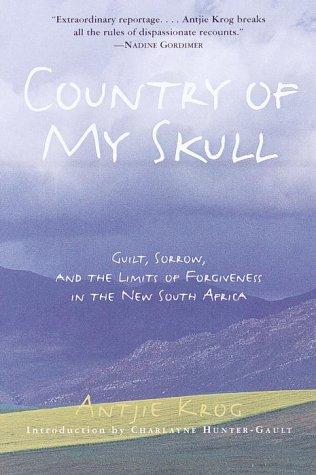
Country of My Skull
by Antjie Krog
Buy on Amazon"Ever since Nelson Mandela dramatically walked out of prison in 1990 after twenty-seven years behind bars, South Africa has been undergoing a radical transformation. In one of the most miraculous events of the century, the oppressive system of apartheid was dismantled. But how could this country - one of spectacular beauty and promise - come to terms with its ugly past? How could its people, whom the oppressive white government had pitted against one another, live side by side as friends and neighbors?"--BOOK JACKET. "To begin the healing process, Nelson Mandela created the Truth and Reconciliation Commission, headed by the renowned cleric Archbishop Desmond Tutu.…
Recommended by
"This is an astounding work of nonfiction. Antjie is one of South Africa’s most important Afrikaans poets. This was her first full book-length work of English prose. She worked as a journalist for the South African Broadcasting Corporation at the Truth and Reconciliation Commission, and she went around the country listening to testimony of victims of apartheid and families of people who had been killed by the apartheid security police. And this book is critical for an understanding of South Africa. She takes you into the raw emotion that exists in South African to this day. And in terms of the emotional aspect, in terms of the feelings, the blood, the open wounds, the heartache and hope and hopelessness she expresses, she does it better than anyone else. She does pepper the book with her own reasons for staying committed to South Africa. I think the Truth and Reconciliation Commission was painted in this book as a failure. I think that it was a very noble effort and the world is still learning from what happened there. I see it as a failure, though, in the sense that white South Africa didn’t embrace it at all. And they still haven’t embraced it. At the time the Afrikaans newspapers were all saying, ‘Don’t blame us, we refuse to be guilty’. “She takes you into the raw emotion that exists in South African to this day.” There was a sort of acknowledgement in the English press, but what they were really doing was pointing at the Afrikaners, which English liberal South Africa has been doing for ever. So there is still this in-fighting among the white community today, rather than a collective acknowledgement about what they are responsible for."
Post-Apartheid Identity · fivebooks.com