Art
by Clive Bell
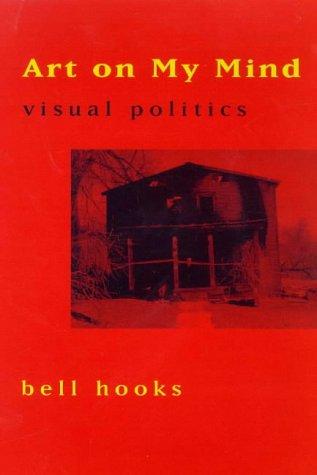
Buy on AmazonIn Art on My Mind, bell hooks, a leading cultural critic, responds to the ongoing dialogues about producing, exhibiting, and criticizing art and aesthetics in an art world increasingly concerned with identity politics. Always concerned with the liberatory black struggle, hooks positions her writings on visual politics within the ever-present question of how art can be an empowering and revolutionary force within the black community. For this collection, hooks has written thirteen new pieces, which complement her authoritative essays on Lorna Simpson, Jean-Michel Basquiat, and Felix Gonzalez-Torres.…
Recommended by
"There are countless novels about the Mexican Revolution, but what fascinated me about Nellie Campobello’s book is her ability to represent the reality of violent warfare not on from the viewpoint of the conflicting parties, but through the emotions; it is the perspective of a girl that reveals the paradox of violence, both in its significance and its futility. I think Cartucho should be read in schools the world over. Get the weekly Five Books newsletter For me, to read Nellie Campobello is to be transported to the adobe kitchen stoves on which my great-grandmother cooked, the Singer sewing machine that all the women in my family learned to use. In the pages of Cartucho I find echoes of my grandmother’s stories about the Chihuahua border, the mythical figure of the revolutionary who gives their life for the right to a decent life, for land, for education, causes that both my grandmothers fought for, one as an agrarian and the other as a rural teacher. It was a really interesting period. After the Revolution, it was the task of intellectuals and artists to reimagine the country, to create its own narrative with its myths, roots, national values and identity traits, everything we know as folklore. Of course there were nationalist political interests too—the goal of unifying the highly diverse social groups that emerged as a result of colonisation and the subjugation of the indigenous peoples. But beyond that, I think it was very important for the Mexico of that time to acknowledge the marks of identity that enabled them to be defined as part of a human group. In this sense the work of Nellie Campobello as a writer, dancer and intellectual played such an important role in preserving and popularising the dances of the first peoples of Mexico."
Five of the Best Classic Mexican Novels · fivebooks.com
"My view is that the philosophy of art is something that arose to deal with a specifically modern problem. Before the eighteenth century, people talked about the individual arts but they didn’t think of them as a unified system. In the eighteenth century you begin to get a feeling that certain things go together — poetry, theatre, dance, music, painting, and sculpture. Prior to that, things could be put together a little differently — music could go with mathematics, or painting could go with medicine, because both apothecaries and painters ground things in pestles. In the eighteenth century we get this formation of what we call the “Fine Arts” and what they called in those days the “Beaux Arts.” They were thought to be unified by the notion of the imitation of the beautiful in nature. But no sooner was that view afoot than there was a crisis: the crisis of absolute music. Absolute music — music without text or programmes — became more and more central. Other art was said to aspire to its condition but, of course, an imitation theory didn’t fit that view very well so other views had to be discovered and a whole range began to be fielded including expression theories, formal theories, and aesthetic theories. This, in turn, was exacerbated by the growing velocity of the appearance of an avant-garde. No sooner did one view of the nature of art appear than it had to be repaired because something else came down the pike. “The task of saying what art is has got to be turned over to the philosophers.” The reason I think that the philosophy of art is particularly modern, and the reason that the twentieth century was so involved with it, was that it had to deal with the constant challenge of the avant-garde. We see that in the first of the texts that I’ve chosen, by Clive Bell. His book, Art, is a defence of a then emerging avant-garde: the avant-garde movement of post-impressionism. Clive Bell is re-educating the English public in a treatise that’s also popular. He is re-educating their taste and how to look at this new work, that is not necessarily imitative. He is defending it with a theory that he claims is philosophical and applies to all art. That’s right. For example, if you look at Raphael’s School of Athens , which is an assembly of all the philosophers of the ancient world, you notice that they are very balanced. One group, over on the right, is balanced by another group on the left. It’s that complex pattern that Bell thought was the object of what we call aesthetic experience or aesthetic emotion — and he calls an experience of ‘Significant Form.’ Art is that which has Significant Form, which causes an aesthetic emotion. What’s particularly important about this way of approaching art is what it factors out. It factors out concern that we might have thought was central in historical artworks which were concerned with religious, spiritual, moral, and political events. In the West, before the eighteenth century, most patronage of the arts was from the church or the state or the nobility. After the eighteenth century, the market and patronage opened up to the bourgeoisie. They begin to use these objects as diverse ways of occupying their increasing leisure time. Bell suggests that all of that past art — all those Madonnas, all those crucifixions, all those kings, all those pictures of battles — were never really about battles and kings, politics, morality, religion or the spirit: they were about composition, they were about achieving formal clarity: apprehension of formal clarity, which they regarded as this special emotional state that arises in the breast of the informed viewer – what Kant would call a kind of disinterested pleasure. Yes. If we think about it, verisimilitude is the most natural strategy for broadcasting religious conviction and doctrine, as well as political affiliation. Now, he never denied that paintings could be representational, he just said that it was irrelevant to its status as a painting — painting qua painting, as someone might put it. The fine arts, the visual arts, had always been deeply imbricated as a means of transmitting political and social and religious conviction. What he did, in a sense, was disenfranchise painting, separating it from the other realms of social practice in existence. Yes, in that sense he was extremely anti-cognitivist. He called the state that the Significant Form was supposed to elicit ‘aesthetic emotion.’ If you wanted to know what aesthetic emotion was, he said it was a kind of ecstasy in which we were lifted out of the concerns of everyday life — concerns about taxes but also concerns like the First World War that happened right after he wrote his book. Compared to a great deal of philosophical writing, Art is very brisk and very well turned out. He has a good sense of a phrase. He also argues well. But the real reason that I chose this book is that it constitutes what we might call the ‘philosophical unconscious’ of aesthetics. Very few aestheticians would say that they are formalists in Bell’s sense, that is, that they think art is just a matter of Significant Form. And yet, there are a number of implications that flowed from formalism that many aestheticians take for granted. They would invoke them as their “intuitions.” For example, the idea that the author’s intention is irrelevant to the meaning of the work, that history and context are irrelevant to the meaning of the work, that issues of ethics, religion, and politics are out of bounds and not relevant to the aesthetic expression. All of those intuitions actually form a coherent cluster designed to take the work of art out of the normal flow of life, out of the way we normally interact with things. Partly because many aestheticians were taught in critical practices like the New Criticism, many of those things constitute a kind of aesthetic subconscious among philosophers. I think it’s important to see this in order to then appreciate the way the conversation about art and the nature of art develops later in the twentieth century."
The Philosophy of Art · fivebooks.com