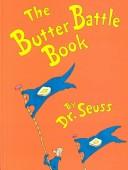
The Butter Battle Book
by Dr Seuss
Buy on AmazonEngaged in a long-running battle, the Yooks and the Zooks develop more and more sophisticated weaponry as they attempt to outdo each other.
Recommended by
"Of all the books on my list, this is actually my favorite. I read it as a boy and I’ve read it to my children. The Butter Battle Book , by Dr. Seuss, is an allegory for nuclear apocalypse written during the Cold War . The premise of the book is that the Zooks eat their bread with the butter side up and the Yooks eat their bread with the butter side down. The Butter Battle Book traces the story of how this trifling difference leads to a war that starts with slingshots, then escalates with ever more elaborate weapons until the last contraption, a gumball-size bomb built by both sides, has the power to annihilate all life on the other side of the wall. The book ends with a Zook and a Yook staring at each other across the wall, on the brink of mutually assured destruction, poised to drop their bombs. Apocalypse stories almost always address what led humanity to the brink of extinction. So, they prompt writers to take on sweeping themes. All of these books are bringing to light big trends with how humans behave towards one another individually, as communities and under different conditions. So, I’ve always been drawn to these books because they take on the big things. 2034 is about what a catastrophic war would look like. Our hope is that readers, having inhabited that world, will realize that war with China is something we want to avoid. If you look at the Cold War, the reason that it stayed cold, the reason why nuclear arsenals were never used, is because both the United States and the Soviets could very clearly imagine what would happen if we went to war. Because they knew how horrible it would be, national security actors on both sides prevented catastrophe. Support Five Books Five Books interviews are expensive to produce. If you're enjoying this interview, please support us by donating a small amount . Many of the great national security catastrophes of the last hundred years — for instance, the Pearl Harbor and September 11th attacks — were the result of failures of imagination. The September 11th Commission explicitly concluded that. You could say the same thing about the Covid-19 pandemic . None of us imagined this. We need to actively imagine what could happen to prevent it from happening. If we consider how entanglements can lead to conflagrations and catastrophe, and our adversaries do too, we’re less likely to sleepwalk into wars. Imagination is a national security imperative. * This interview took place before Dr. Seuss Enterprises decided to stop publishing six titles which “portray people in ways that are hurtful and wrong.” The Butter Battle Book is not among those titles. It does not contain depictions of any people and its antiwar theme makes it a mainstay on lists of pro-peace picture books for kids."
The Best Apocalyptic Fiction · fivebooks.com
"I was reading this to my daughter and I suddenly realised it should be compulsory bedtime reading for all children in the Caucasus because it’s actually about ethnic conflict. Well, it’s more explicitly about the Cold War, but I read it through my Caucasian lens. It’s about the Yooks and the Zooks and it’s about 20 pages long. On the last day of summer, ten hours before fall… my grandfather took me out to the wall. For a while he stood silent. Then finally he said, with a very sad shake of his very old head, ‘As you know, on this side of the wall we are Yooks. On the far other side of this wall live the Zooks.’ Then my grandfather said, ‘It’s high time that you knew of the terribly horrible thing that Zooks do. In every Zook house and in every Zook town every Zook eats his bread with the butter side down!’ Then the Yooks and the Zooks get into this conflict, and it’s generally true about what Freud called the narcissism of minor difference – that people end up in conflict with people who are only marginally different from themselves. Yooks and Zooks could be Georgians and Abkhazians or Armenians and Azeris, who actually have so much in common. They adopt this bizarre identity and historical arguments to prove hatred for one another when in reasonable times they get along fine. Well, I think most of the time they are aware that they have a lot in common, but for political reasons they can be manipulated and a bit of satire might help remind them of their better instincts."
Conflict in the Caucasus · fivebooks.com