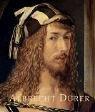
Albrecht Dürer
by Jeffrey Ashcroft
Buy on AmazonText and illustrated monographs present the life and works of the artist and engraver considered to be the greatest of the Renaissance period in northern Europe.
Recommended by
"I really honour the extraordinary work of translation Ashcroft accomplished, making these sources available with extensive editing and footnotes. Every specialist will still rely on the German edition from which he translates most of this, but it remains an astonishing work to have completed and far superior to anything else that was available in English, not least because Dürer wrote with a very strong Franconian dialect. To be able to delve into this accurately and very scrupulously think about the translation is a great achievement. Some years ago I talked to a friend and art critic in England and she asked me, ‘Do you like Dürer?´I found this incredibly enabling. Before I spoke to her, it hadn’t occurred to me that you might not like Dürer. Growing up in Germany, I was raised with a very strong image of ‘Dürer the genius’. In Anglo-American discourse, increasingly, because of a focus on his self-portraits, there is an emphasis on him as almost arrogant. Dürer has become the ‘selfie man’, the man who plays these strategies for self-aggrandisement. As a corrective, it’s very important to point out that he did not paint another portrait of himself on a self-standing panel after 1500. So it’s not as if he went on doing that over and over again, throughout his life. Think of Rembrandt , by contrast! For me, the complexity of Dürer’s character really comes through on a close reading of the sources he’s left behind. For example, I analysed the nine letters he wrote to a patron in Frankfurt, a merchant named Jakob Heller who had commissioned an altarpiece. These letters are challenging sources to interpret, because you can easily read them as very strategic or tactical — what Dürer wants is to get paid almost double what he had asked for at first. “Growing up in Germany, I was raised with a very strong image of ‘Dürer the genius’” On the other hand, and in contrast with his impulse to measure his recognition in terms of how much he was paid, we know from many documents that he felt pressure to provide for his family and lead what we might call a middle-class life. It was only later, when he developed his printmaking, that he became actually astonishingly wealthy in Nuremberg. In his early collaborations with patrons, he’s trying to make a decent living, and given his talent, he’s quite right to insist on that. We also get a sense of Dürer’s passion for complex painting commissions when he got really involved with them. What we get from across the writings of the time, his own and those of others, is the sense of someone who wants to be recognised and independent, but who’s also struggling with something else. And that is that he received relatively little formal education. When he writes a dedication for his ‘Treatise On Measurements’, he even hired a ghostwriter to do that for him, he was that uncertain. Then he’s not very happy with the ghostwriter! I’ve asked other Renaissance specialists, and it’s quite a singular thing to be doing. He’s someone who can obviously feel and express that he is probably the best painter of his age, and to defend that viewpoint. But he’s also someone who can feel very vulnerable and who’s striving hard to accommodate to that Italian humanist ideal that’s forming among Renaissance artists, as exemplified by the writings of Alberti and Jacopo de’ Barbari . This ideal maintained that it’s not enough to paint extremely well. As an artist worth his salt, you have to be super inventive all the time, it’s also that you have to speak very elegantly, even to be able to write poetry. Dürer tries his hand at poetry, and it is a disaster. His poems are really bad, and he gets ridiculed for them. They too reveal a very different voice from him than what we might expect, actually rather pious and concerned with housekeeping and domestic affairs. So what’s interesting to me in registering all these voices that ran through Dürer’s texts and clearly his own mind is how often they are difficult to reconcile with one another, although that, of course, reflects back to the very different lives he was leading and obliged to lead, in a sense, in order to attain this Renaissance ideal of self-fashioning . Although he had quite a libertarian streak, he went to church several times a week. He was very close to his mother, while she was alive, a very devout and anxious and religious woman. The company he kept, however, often revolved around moneyed classes, merchants who were risk-taking and acquiring the luxuries and expensive novelties of the day. In other words, through a review of the Dürer archive, I wanted to arrive at a more complex image of him as an artist and individual, in that astonishing time where so many different strands of experiences and discourse run parallel to each other. I see a man struggling to make sense of them all and struggling to project himself into the drama. In addition, the Reformation movements emerge as further backdrop, to make everything even more troublesome. Many people come to Dürer early in life as children. He had such a wonderfully engaging way of observing nature — just think of the famous image of the hare, for example, which has become very familiar. Growing up in Germany, Dürer was extremely prominent. As a child I was taken to see his house in Nuremberg, I collected postcards by him. And yet, I only discovered much later that he had written a lot, and that we could actually find out a great deal about him as a person from his writings as much as his art. For me, this was a discovery that demystified him in certain ways. It became possible to know Dürer as an individual. So I think what motivated me is threefold, and it also speaks to the books I’ve chosen, all of which seek to honour his extraordinary abilities and achievements. Firstly, I was very intrigued by him as a person, with the way he dealt with the very real commercial pressures of his time, a period of rapid economic and social transformation. Secondly, in a very Renaissance way, he felt pressure to project himself and fashion himself, something we will discuss later. Thirdly, on my reading of the many texts he left behind, I wanted to show that he was actually a challenging and contradictory character. Although he succeeded in his self-fashioning, and arguably to a greater degree than most of his peers, he also had to pay a price for his choices. Instead of ending up with a linear narrative that goes from his beginnings in print to the Christ-like self-portrait from 1500 for which he is so famous, and artistic success after success, we end up with a much more interesting and fractured narrative. Support Five Books Five Books interviews are expensive to produce. If you're enjoying this interview, please support us by donating a small amount . Moreover, this narrative doesn’t end with his death. So part of the book then asks, how well-known was Dürer after his death? He was certainly well-known for his drawings and prints. But after 1511, he gave up doing these extraordinary altarpieces. The story of why he did that, what triggered this change of direction, is at the heart of my book. The analogy I use is literature, or music. If you had it in yourself now, say, to write a complex novel, and you decided not to do that, and instead write a short story; or if you had it in yourself to compose a symphony, and you said, ‘No, I’m doing short chamber concert pieces’. That’s a fairly radical and unusual position. That’s the decision he made, a decision of extraordinary magnitude when, after falling out with Jakob Heller, he decided not to take on new commissions for altarpieces anymore. Next, I retell the story of what is commonly known as the Dürer Renaissance, well after his death. I analyse why it is that collectors like the big Fugger merchants in the 1570s were so keen on very different things from collectors in the past, like coral and shells and other types of rare and unusual items. They might not have mentioned Dürer at all in their writings or their inventories. Why is it that even the first extensive cabinet of curiosities in Munich of the art collectors featured works by Dürer but wouldn’t label them? This then changed at the end of the 16th century and is commonly framed as a Dürer Renaissance. It was the moment when big collectors like Emperor Rudolph II in Prague and Duke Maximilian I of Bavaria built up their painting galleries and became very keen on old masters . They tried to cream off every Dürer painting they could get their hands on. This went alongside other very different tastes in rarities and curiosities. I want to show just why that was. Dürer himself was a collector and also a purveyor of these consumerist luxuries at a time when cabinets of arts and curiosities, the Kunst-und-Wunderkammern , became all the rage around Europe."
Albrecht Dürer · fivebooks.com